
Korean Drinking Culture Doesn’t End at the First Bar
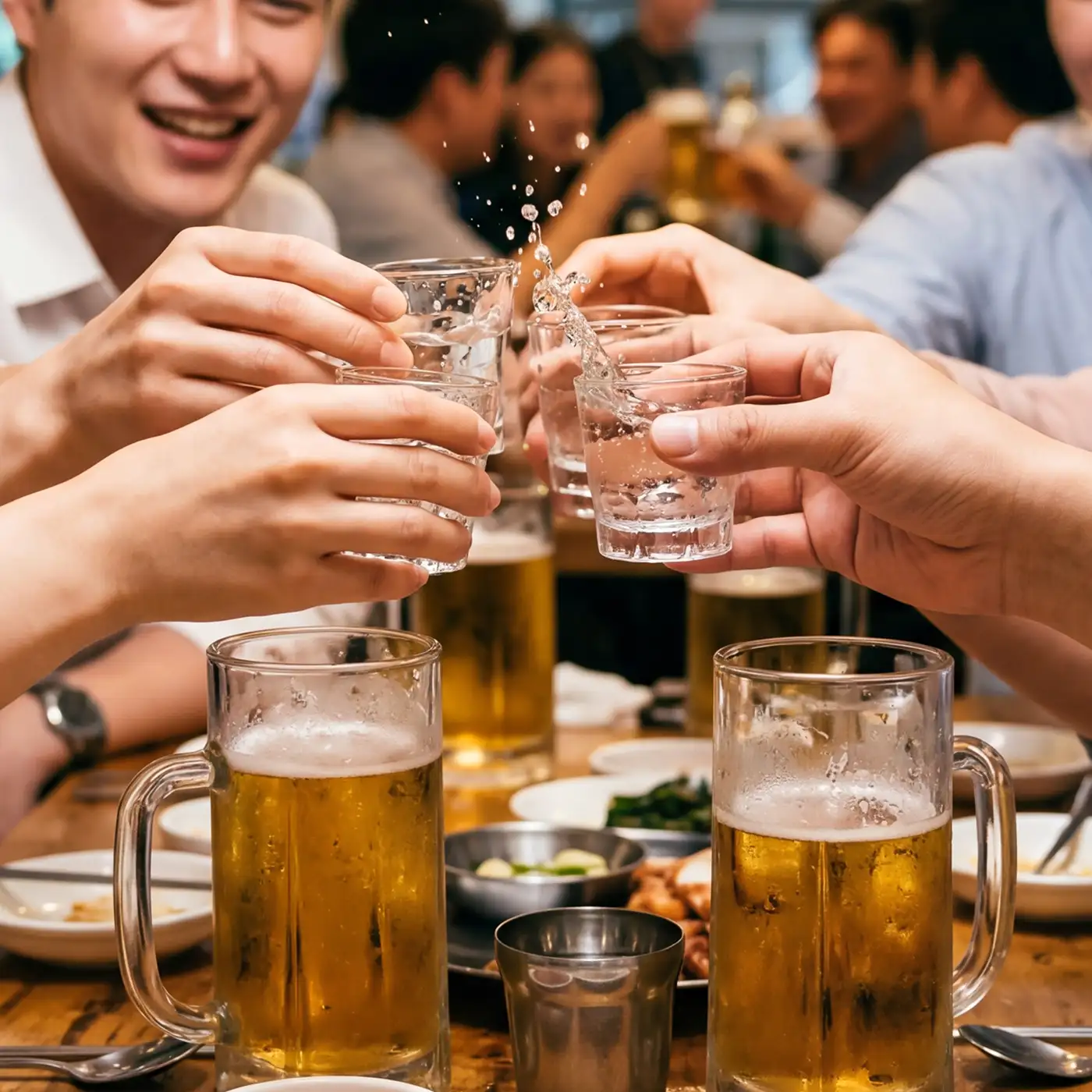
Korean drinking culture confuses foreign visitors less because of what people drink than because of how the night is structured. A dinner that starts at seven can still be going at one in the morning, in a different building, with the same people, and nobody planned it that way at the start.
Korean Drinking Culture Runs on Rounds, Not Drinks
An evening out has stages, and they have names. Ilcha is the first round, usually dinner with alcohol at a restaurant. Icha is the second, which typically moves to a bar or a pub. Samcha is the third, and by then you’re at karaoke, a late-night pojangmacha, or someone’s questionable idea.
Each stage happens somewhere different. That’s the part that surprises people. You don’t settle in for the night at one venue. You finish, pay, walk five minutes, and start again.
The unspoken rule is that leaving after ilcha is fine, leaving after icha is normal, and staying through samcha means something. Nobody will stop you at any stage, but the person who stays until the third round is the one people remember the next morning.
Younger Koreans and post-pandemic workplaces have shortened this considerably. Two rounds is now the common ceiling in many offices where three was standard a decade ago.
Anju Is Not a Side Dish
Ordering alcohol without food is genuinely unusual in Korea, and not because of any rule. The food and the drink are treated as one order.
Anju refers to whatever gets eaten alongside drinks, and different alcohols pull different food. Soju goes with grilled pork belly, spicy stews, or sashimi.
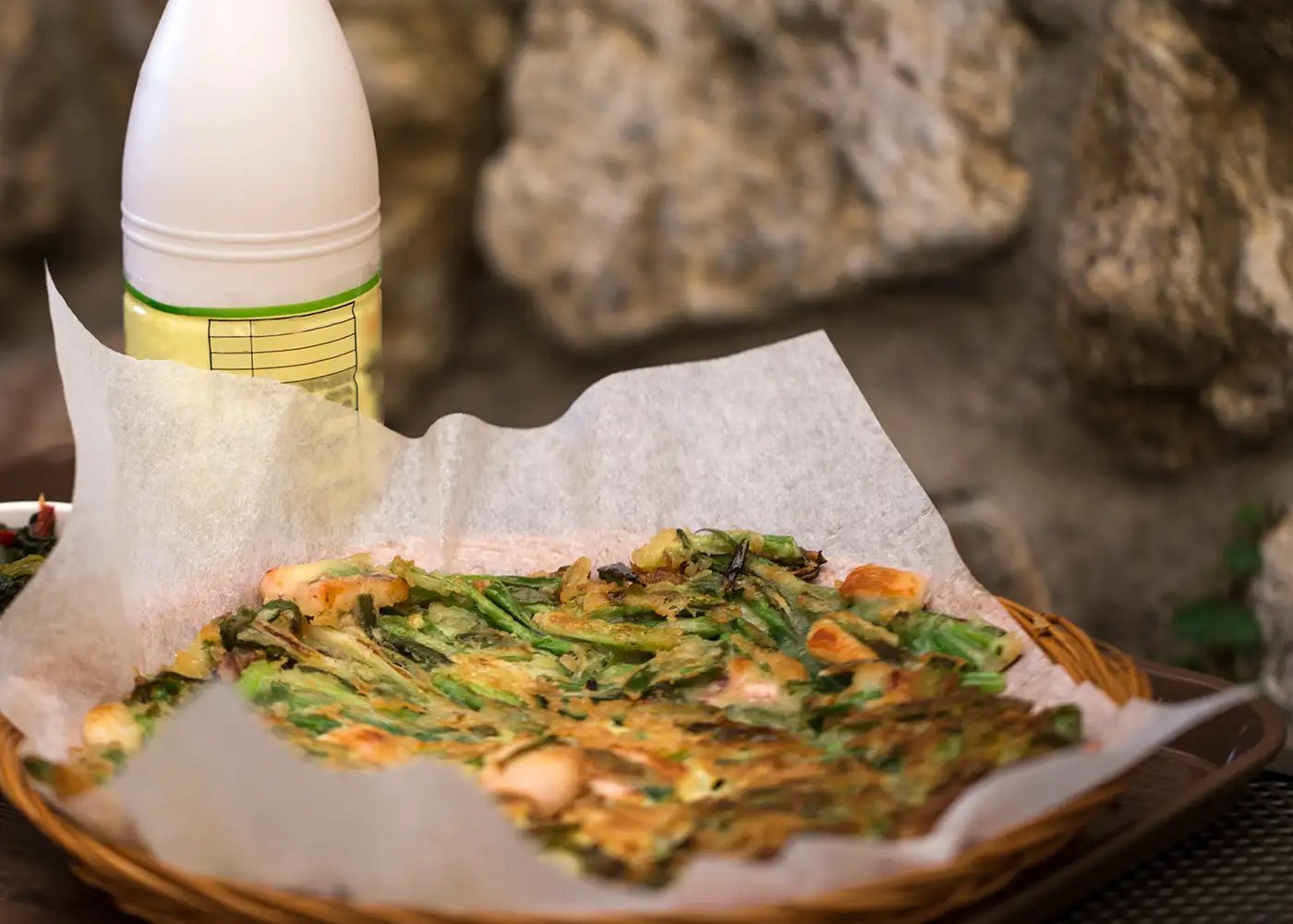
Beer pairs with fried chicken, the combination Koreans call chimaek. Makgeolli, the cloudy rice wine, arrives with savory pancakes, and the pairing is so fixed that many Koreans crave it specifically on rainy days.
The practical consequence for a visitor is that you eat more than you planned. A four-hour session across two venues means two full rounds of food, which is also why people stay upright longer than the volume of alcohol suggests they should.
The Games Are Real and You Will Be Included
Drinking games aren’t an optional add-on to Korean drinking culture. At any table with more than three people, something will start.
Most run on rhythm and speed. Baskin Robbins 31 is a counting game where whoever says 31 drinks. Son-byeong-ho involves hand gestures at speed. Titanic stacks a shot glass floating in a beer glass, with each person pouring soju until it sinks, and the person who sinks it drinks everything.
You will lose at first. Everyone does. The games exist to lower the barrier between people who work together but don’t know each other well, which is the actual function of the whole evening.
Where Korean Drinking Culture Actually Happens
The venue types matter more than the drink menu.
Pojangmacha are tented street stalls or small informal restaurants, cheap and loud, best for late rounds. Hof are Korean beer pubs, the standard icha destination, serving fried chicken and beer in large volumes. Sul-jip covers traditional Korean bars, often serving makgeolli with pancakes in a quieter setting.
Recent years have added wine bars and craft beer spots to the rotation, especially in Seongsu and Yeonnam-dong, and younger drinkers increasingly build entire evenings around them instead of the traditional progression.
That shift is real but uneven. Corporate dinners still default to the older format.
Who Pays in Korean Drinking Culture
The traditional model is straightforward: the most senior person at the table pays for ilcha, and someone else picks up icha. Splitting a corporate dinner bill down the middle would have been strange twenty years ago.
That’s changing, particularly among people under thirty-five and in smaller companies. Dutch pay, borrowed directly into Korean as a term, has become normal among friends and increasingly acceptable among colleagues.
As a foreign guest at a Korean table, you’ll likely find someone insisting on paying regardless of your protest. Offering to cover the next round is the graceful response. Insisting on splitting the first one usually isn’t.
What Actually Changed
Korean drinking culture has a reputation built on an older corporate era, when declining a superior’s drink carried real professional cost. That version has thinned out substantially.
Alcohol consumption among Koreans in their twenties has dropped. Company dinners end earlier. The expectation that everyone attends has weakened enough that “I have plans” now functions as a complete sentence in most workplaces.
The structure survives, though. The rounds, the food, the games, the walk between venues.
What changed is that Korean drinking culture is now closer to an invitation than an obligation, which makes it considerably more enjoyable to accept.