
Korean Wedding Envelopes Are Calculated, Not Guessed
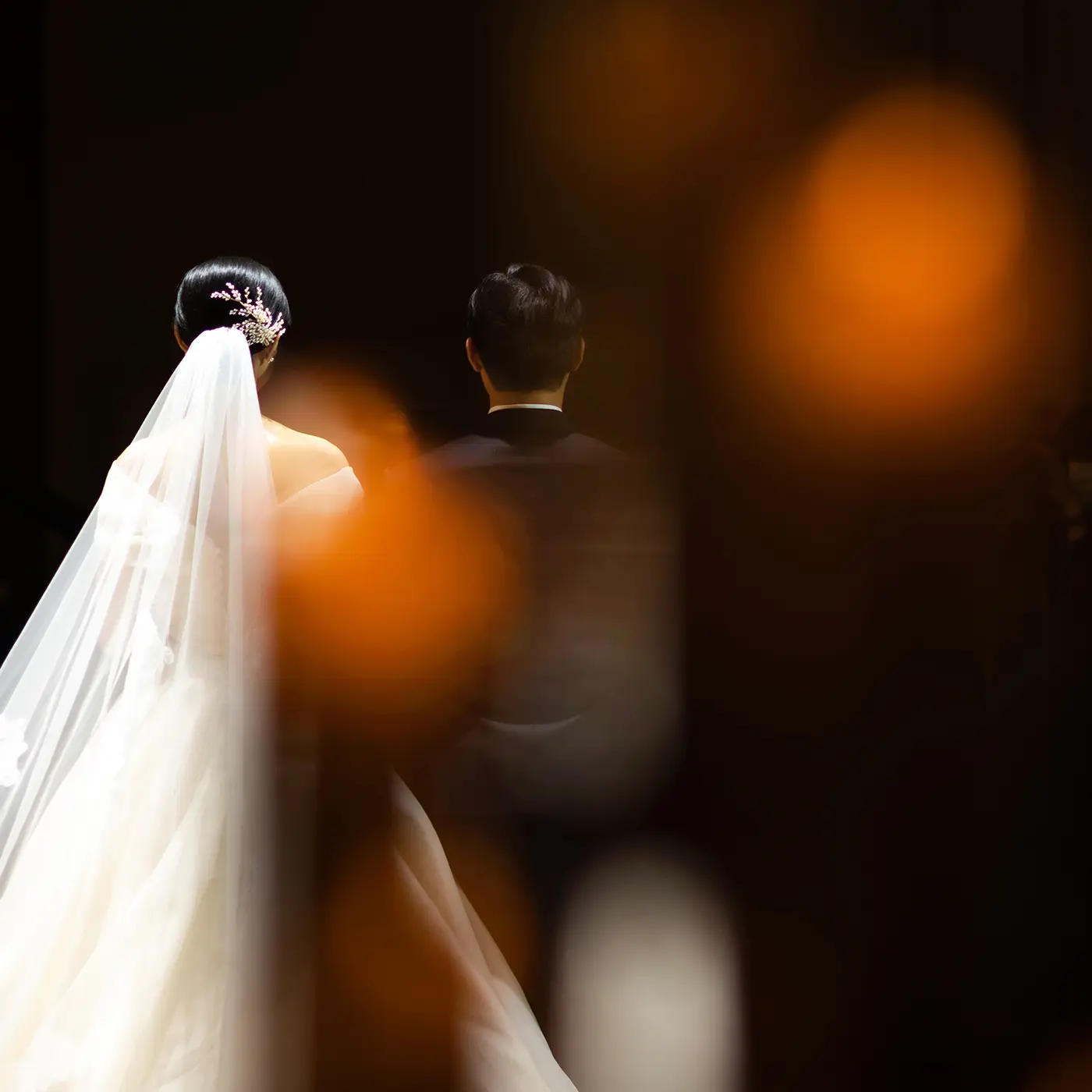
A Korean wedding replaces the gift registry with a white envelope of cash, and the amount inside isn’t a matter of generosity. It’s arithmetic. Once you understand what the couple is paying per head, the number people give stops looking arbitrary and starts looking like a spreadsheet.
Korean Wedding Bill Explains the Envelope
The average Korean wedding ceremony at a standard wedding hall reached 21.39 million won as of February 2026, according to the Korea Consumer Agency. Seoul and the surrounding metro area averaged 27.42 million won, while weddings outside the capital region came in at 15.74 million won.
The part that matters for guests is the per-head cost. Meals at standard wedding halls average around 60,000 won, climbing to roughly 88,000 won in Gangnam.
Now the gift amounts make sense. Fifty thousand won is the baseline for someone who isn’t attending the meal. One hundred thousand won has become the standard for attending guests, calibrated so the couple isn’t losing money by feeding you.
Close friends give 150,000 to 200,000. Kakao Pay’s transaction analysis put the national average at 90,000 won.
Two rules govern the physical envelope. Use crisp bills, since wrinkled notes read as careless. And avoid any amount starting with four, because the number is associated with death in Korean and 40,000 won lands badly regardless of what you meant by it.
Nobody publishes any of this as a rule, and every Korean adult knows it anyway.
Arriving at a Korean Wedding
You won’t find a guest book first. You’ll find two reception desks, one for the groom’s side and one for the bride’s.
Hand your envelope to the desk for whoever invited you, writing your name vertically on the back. Envelopes are usually available there if you arrive without one, though bringing your own is better form. In return you receive a sikgwon, a meal ticket.
Do not lose it. That ticket is the entire back half of the event.
What you wear matters more at this moment than at any other, since the desk is where you’re seen.
Dark suits work for men. Business-formal in muted tones works for women. Two things to avoid: white, for the obvious reason, and head-to-toe black, which reads as funeral attire. Navy with one colored element is the safe call.
The Ceremony Runs 30 Minutes
That surprises people expecting an afternoon.
An officiant called the jurye gives an address, often a respected mentor or senior colleague, sometimes a hired professional. Vows and rings follow. Close friends may perform a congratulatory song, the chukga. The couple bows to the guests. Done.
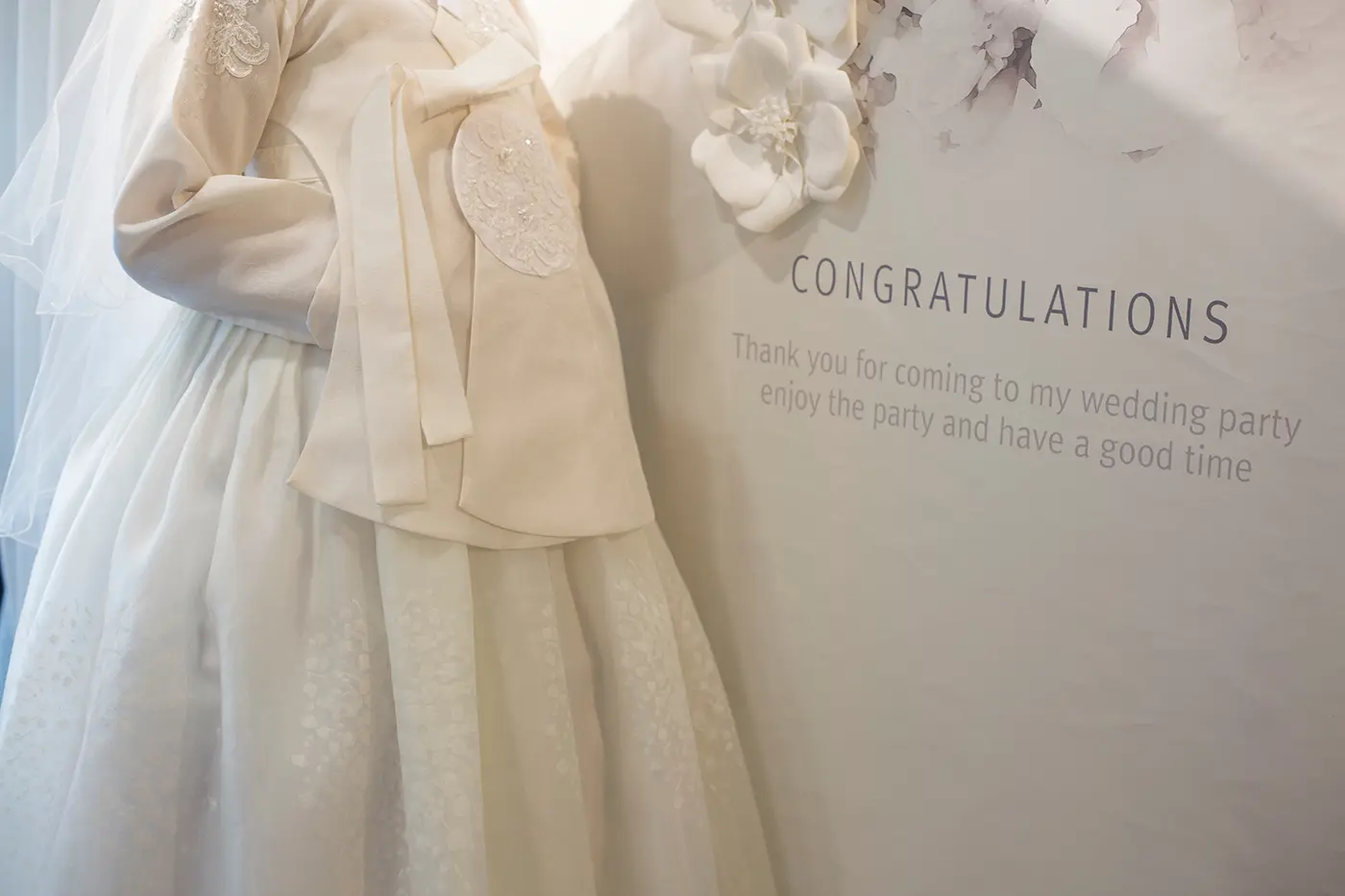
What you won’t see is the pyebaek, the traditional family ceremony where the couple changes into hanbok and bows to the parents. That happens separately, usually with immediate family only, after the main ceremony ends.
One detail worth knowing: the bouquet toss isn’t a toss. Korean brides typically pre-select who receives it, usually a close friend already in a relationship.
The reasoning is practical rather than superstitious, since announcing to a room of single women that whoever catches it marries next puts people in a position they didn’t ask for.
The Buffet Is Where It Actually Happens
Here’s what foreign guests find hardest to accept. You can hand over the envelope, watch part of the ceremony, eat at the buffet, and leave.
That’s normal. It isn’t rude. The ceremony is largely for the families, and the meal is for the guests. If you ate well and congratulated the couple, you did it correctly.
The buffet is also the only part of a Korean wedding where actual conversation happens. The ceremony is a performance to be witnessed. The meal is the social event, and it’s where you’ll meet the people who matter to whoever invited you.
Korean Weddings Are Increasing Again
After years of decline that generated a great deal of commentary about young Koreans rejecting marriage, the trend reversed.
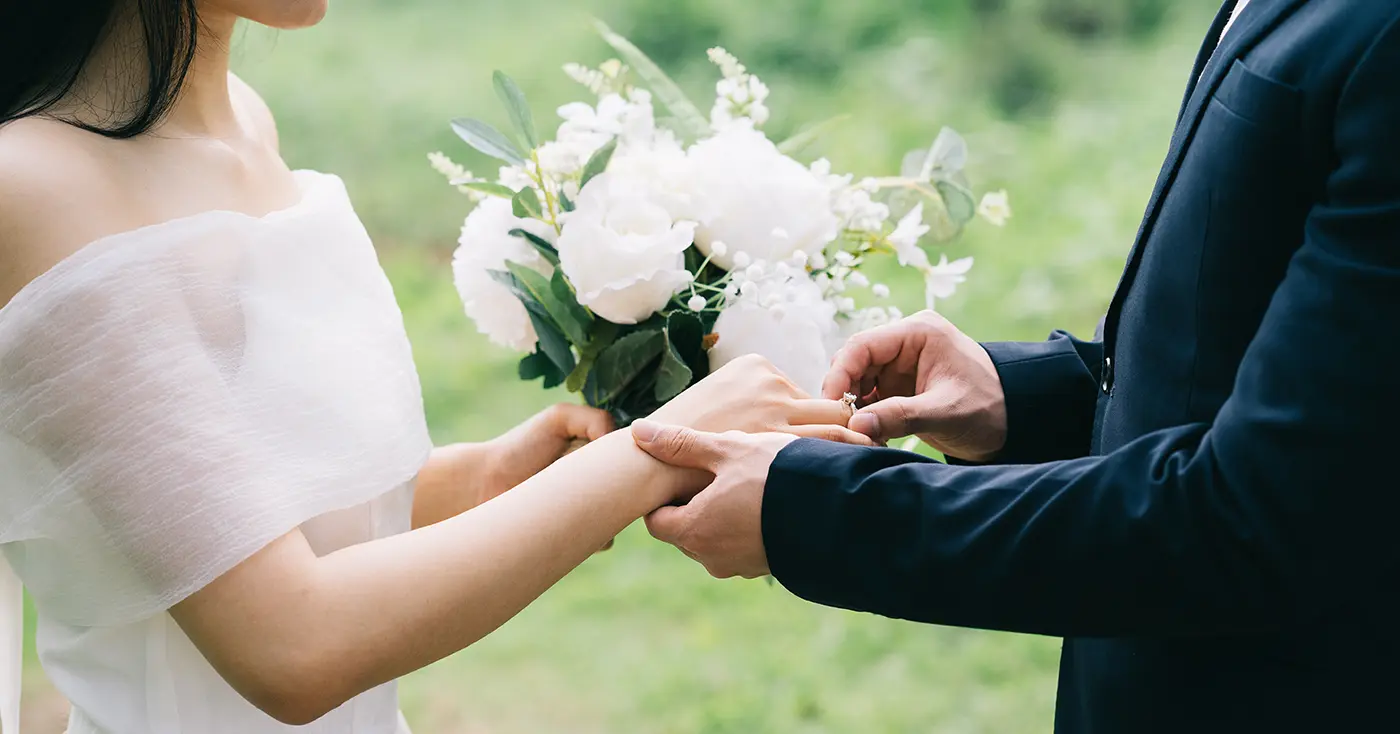
Korean marriages reached roughly 240,000 in 2025, up 8.1 percent from the previous year and the highest figure since 2018. International marriages accounted for about 20,700, or 8.6 percent of the total.
The wedding hall format still dominates, though hotel weddings, small ceremonies, and outdoor venues have all grown.
The efficiency people criticize is also what makes a Korean wedding possible at scale in a city as dense as Seoul, where halls run one couple at noon, another at one, another at two. Thirty minutes isn’t a lack of care. It’s a schedule that has to hold.