
Hanbok, What the Colors and Patterns Actually Say
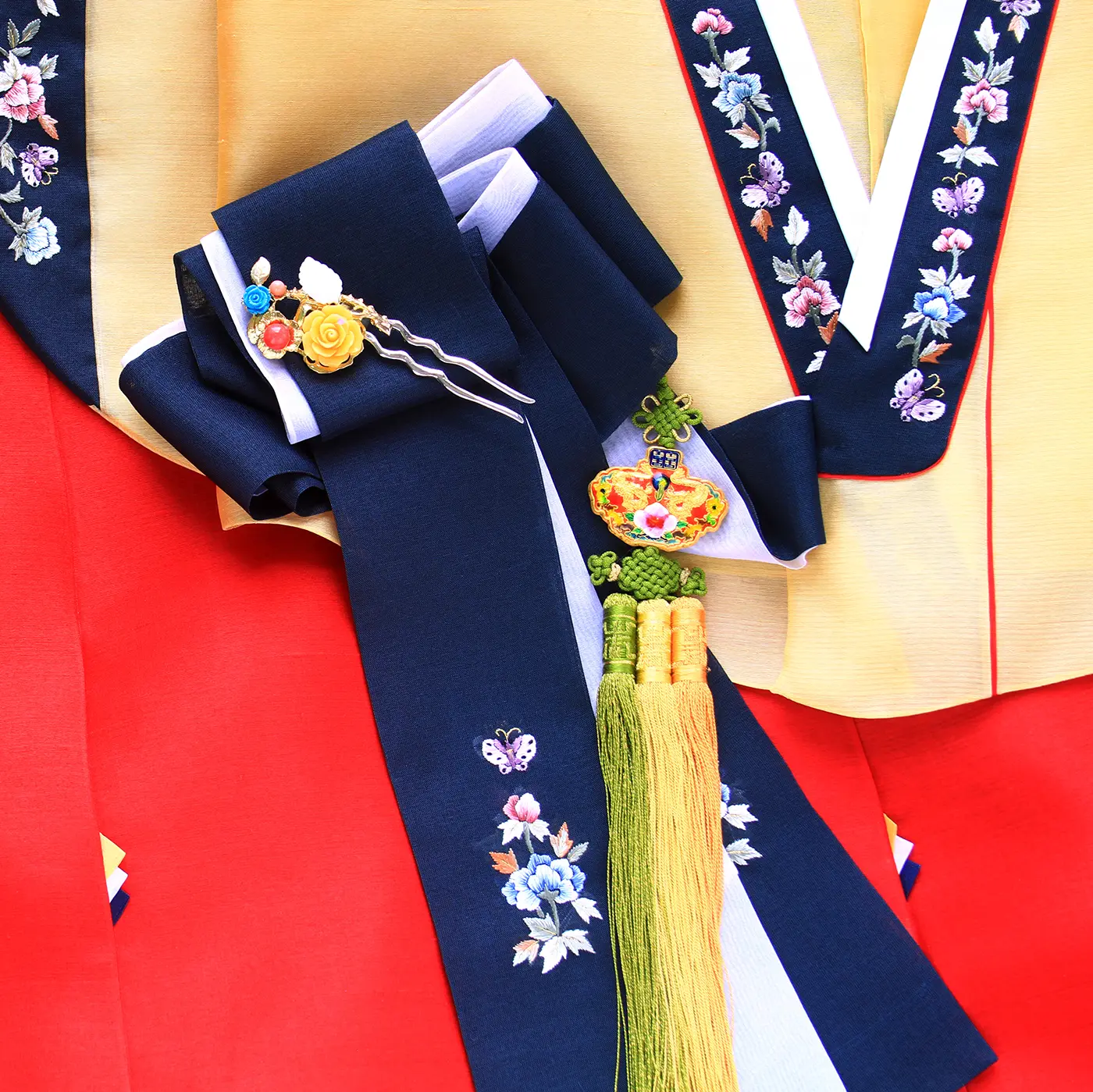
Hanbok meaning goes far deeper than most rental shop signs or Instagram captions let on. Walk around Gyeongbokgung on any given afternoon and you’ll see dozens of visitors in bright yellow, red, and blue hanbok, chosen because the color looked good in photos.
Centuries ago, that same color choice would have told everyone around you whether you were married, single, or a mother of sons -and nobody would have needed to ask.
Hanbok Meaning Starts With a Color Code Most People Have Forgotten
The meaning behind hanbok colors wasn’t decorative — it was structural. Traditional hanbok drew its palette from obangsaek, a five-color system tied to yin-yang and the five elements: white, red, blue, black, and yellow.
Each color carried social information. Unmarried women typically wore a yellow jeogori paired with a red chima. Married women shifted to green and red. Women who had given birth to sons wore navy. Men’s colors signaled age, rank, and Confucian scholarly status just as precisely.
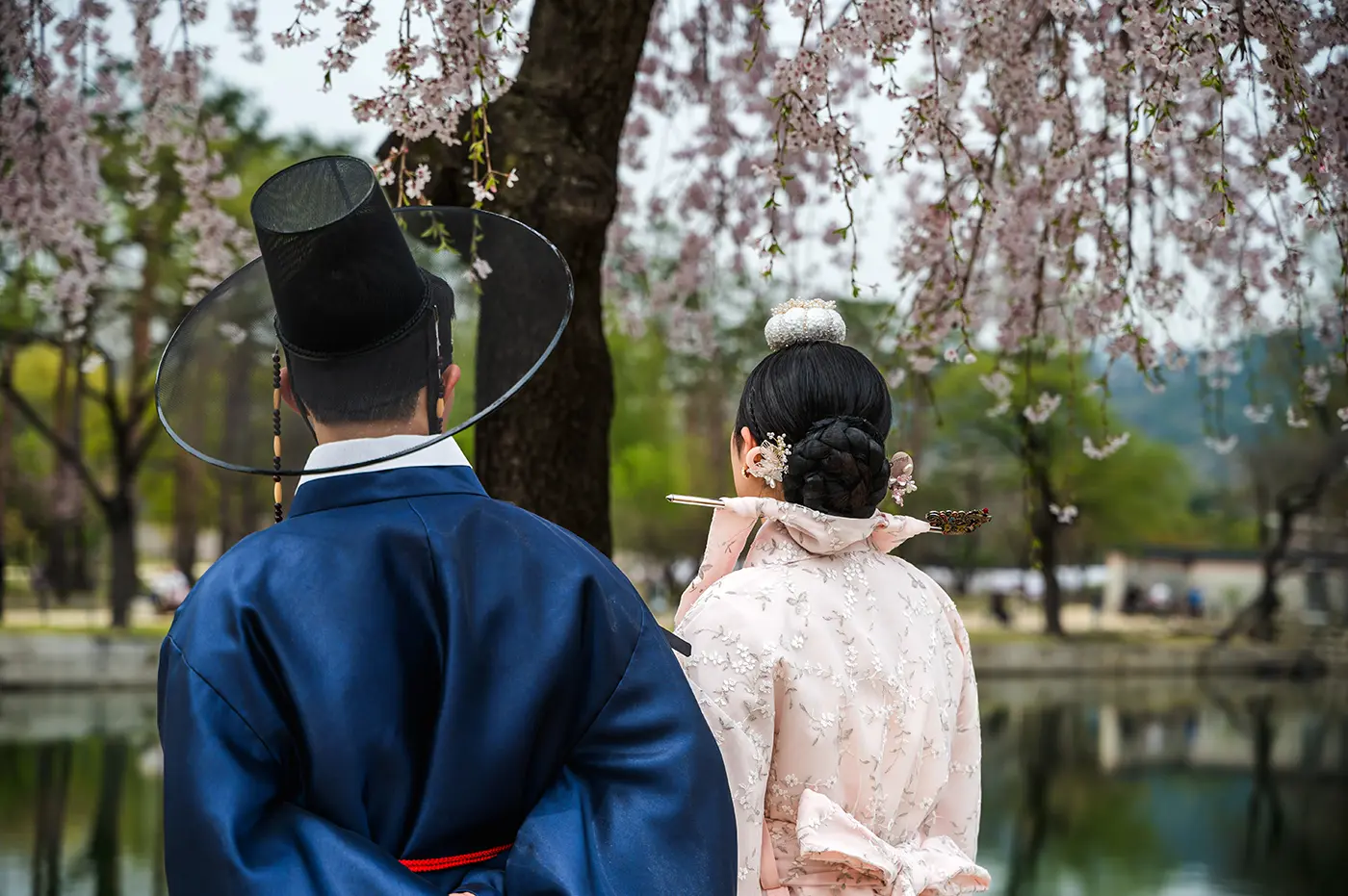
None of this was subtle or optional. A stranger could look at your hanbok across a crowded market and know your marital status before you said a word.
Compare that to today, when color is chosen almost entirely for how well it photographs against a palace wall, and the contrast shows how much of that original visual language has quietly disappeared.
The Patterns Told Their Own Story
Color wasn’t the only carrier of meaning. Embroidered motifs added another layer entirely. Peonies stitched onto a wedding hanbok expressed a wish for honor and wealth. Lotus flowers signaled a hope for nobility.
Bats and pomegranates, oddly enough, represented a wish for children. Dragons, phoenixes, cranes, and tigers were reserved exclusively for royalty and high-ranking officials, which meant spotting one of those patterns on the street told you immediately who you were looking at.
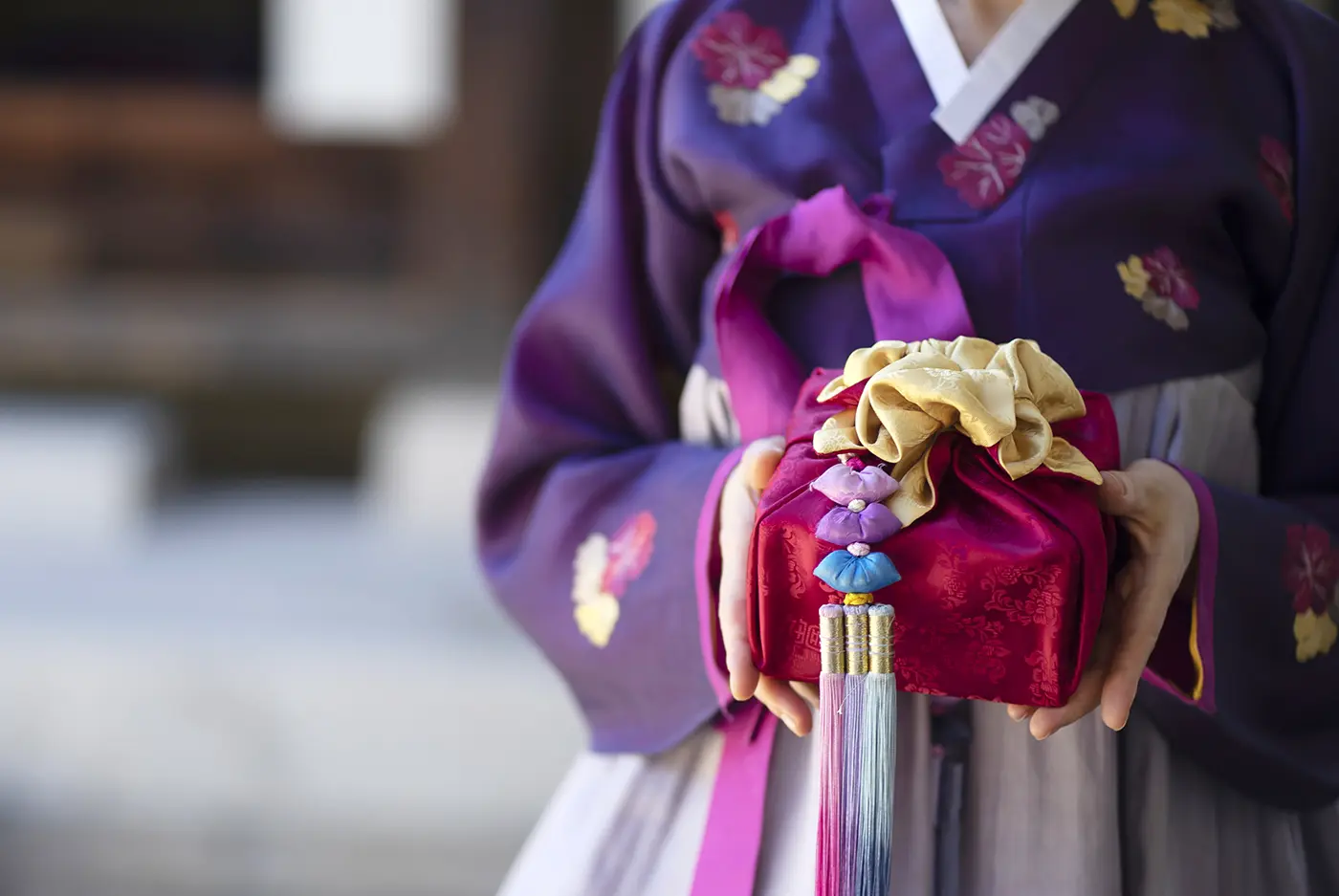
These weren’t decorative flourishes chosen for beauty. They were a visual vocabulary that let people read status and intention at a glance -the same way a uniform or a wedding ring works today.
Why the Meaning Faded While the Fabric Survived
Western suits and dresses began replacing hanbok as everyday wear in the late 19th century. By the time hanbok made its comeback as festival and photo-op attire, the practical need for the old color rules had already faded.
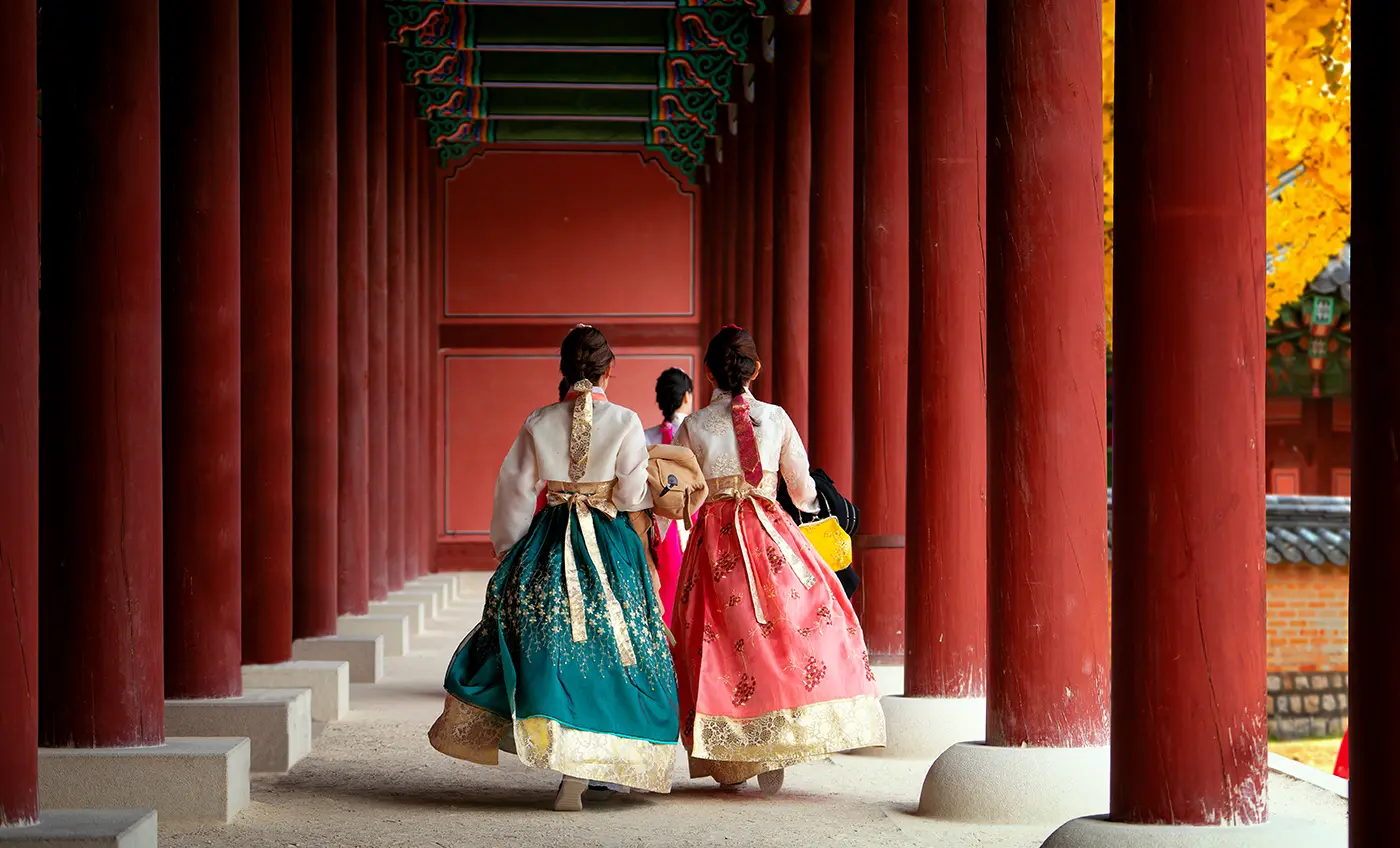
Today, no one needs clothing to announce marital status, so fewer people learn what each combination once meant.
What remains is mostly aesthetic. Rental shops near Gyeongbokgung and Bukchon now choose colors based on what flatters the wearer’s skin tone rather than social meaning -whether the customer is Korean or a foreign visitor. Before you rent a hanbok, it might be worth knowing the language it used to speak.
Should You Care About Hanbok Meaning Before Renting One?
Definitely worth to know.
Hanbok has always adapted to the moment. What mattered in the Joseon era doesn’t need to matter at a modern rental shop, and there’s nothing wrong with picking the pink chima because it looks striking against stone palace walls rather than because you’re signaling anything about your family line.
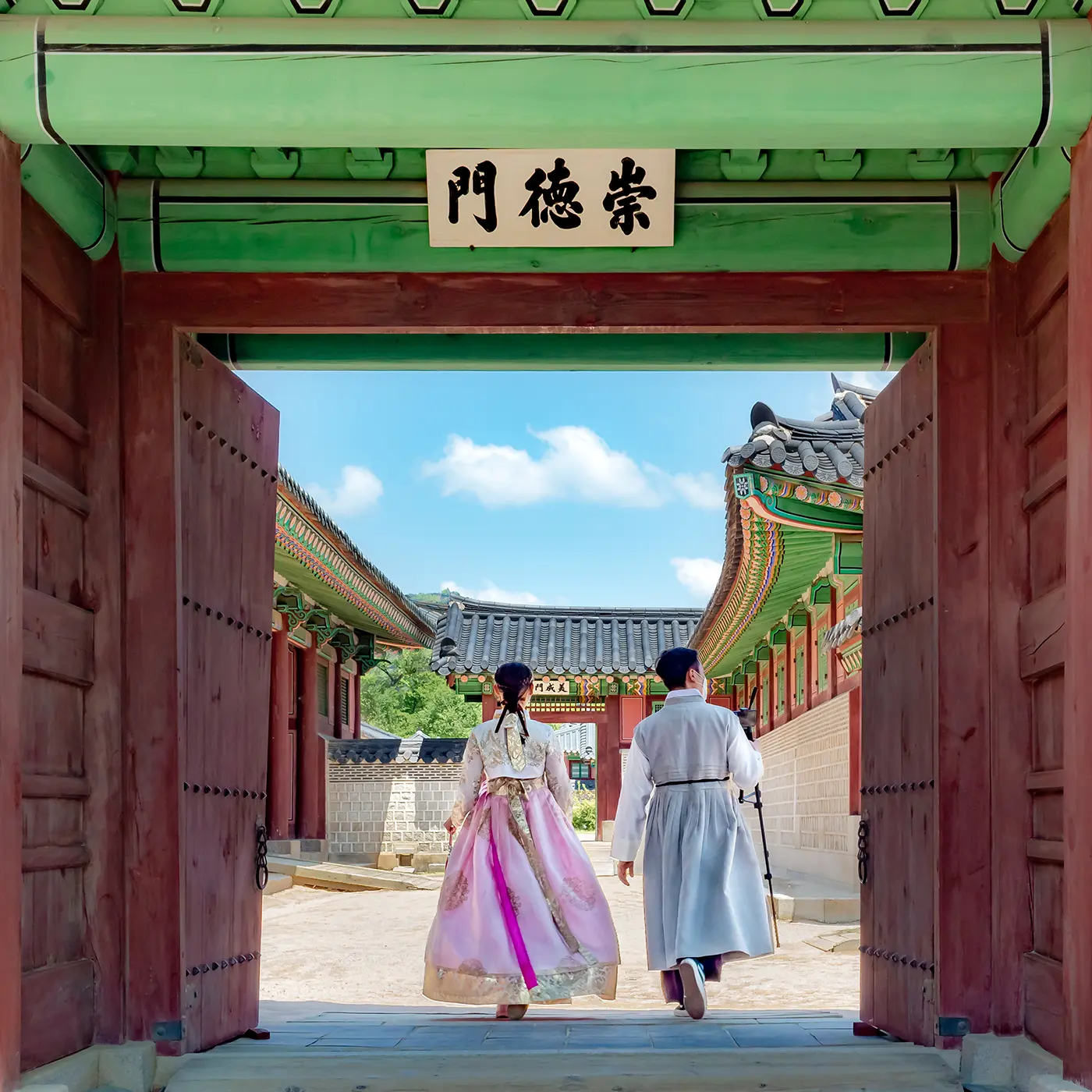
But knowing the hanbok meaning behind just colors changes how the palace crowds look once you’re standing in them. Every visitor around you in a different colored hanbok would once have been legible at a glance, marital status, rank, even hope for children, all worn openly.
Now it’s just color, chosen for the camera. Understanding what used to be encoded there doesn’t make the fashion less enjoyable. It just adds a layer most people walking past never notice.